

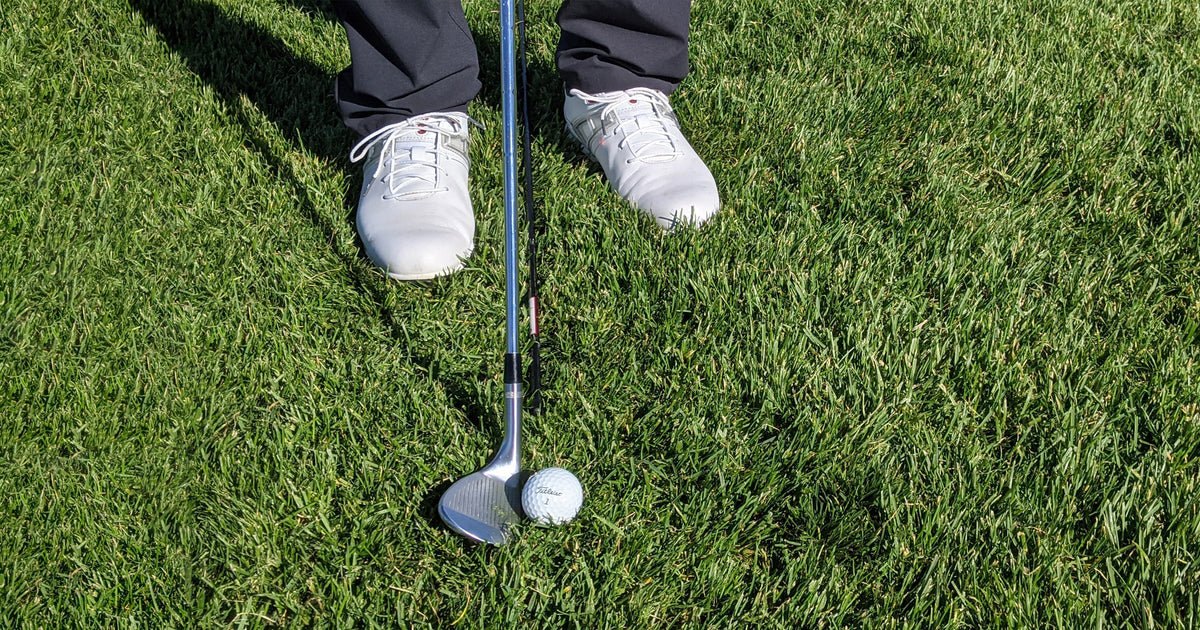
I know exactly what I would teach you if you had a chipping lesson with me today.
Or I should say I probably know. I always leave room for my students to surprise me, but the fact is, there are three tips I’ve shared in nearly every chipping lesson I’ve had over 35 years of coaching.
These three chipping tips come up time and again because:
-
They get immediate results
-
Most amateur golfers tend to do the opposite
Not you, though. Not after today. Because you’re about to learn all three tips, no appointment necessary.
BONUS: Get Todd Kolb's FREE Chipping Cheat Sheet!
Todd Kolb’s Chipping Lesson: Key Takeaways
Here’s my standard chipping lesson in a nutshell:
-
Tip #1: Fix your ball position so the ball is in the middle of your heels.
-
Tip #2: As you swing back, keep your hands inside and the clubhead outside.
-
Tip #3: Set up with your weight on your lead foot and the buttons of your golf shirt tilted toward the target.
-
Bonus Tip: For a more in-depth chipping lesson and a complete short-game upgrade, check out my bestselling book, The Easy Break.
Now for the slightly longer version…
Tip #1: Fix Your Ball Position
Right away, I’m going to defy traditional advice.
When you first learned how to hit a chip shot, you were probably taught to move the ball way back in your stance, positioning it off your trail foot.
Other instructors have their reasons for teaching ball position this way, and I can respect that. But in my experience, amateur golfers have a lot more success with chipping when they position the golf ball in the center of their heels.
Generally speaking, your golf swing reaches its low point at the center of your stance. Position the ball in the center where the low point will be, and you’ll get ball-first contact and maintain the loft that’s built into your clubface.
If the ball is farther back in your stance, you’re likely to make contact at an extreme downward angle that delofts the club. This defeats the whole purpose of playing a wedge to begin with.

How to Find the Best Ball Position for Chipping
If you were in a chipping lesson with me, I’d tell you to practice perfecting your ball position with an alignment rod.
Set the alignment rod on the ground so it tracks straight out from the golf ball and runs between your feet. Shift your feet so the rod is in the center of your heels. That’s how you want to set up for every chip shot. Practice with the alignment rod until you can accurately visualize the center of your stance without it.
As long as you’re improving your chipping setup, you might as well add these adjustments, too:
-
Flare your toes slightly.
-
Open your stance just a bit.
Combined with the right ball position, those changes set you up for a great chip shot.

Tip #2: Keep the Hands In and the Clubhead Out
As you swing away from the golf ball, you want to feel like your hands stay inside while the clubhead stays outside. This sets you up for a backswing that works back and up rather than moving around the body.
A lot of amateur golfers—especially low-handicap golfers—tend to swing around their body. This moves the low point and causes them to hit behind the golf ball.
You make much better contact when you bring the golf club back and up on the backswing.
How to Keep the Hands In and the Clubhead Out
As with all new techniques, it’s a good idea to teach your body how the proper motion feels so you can eventually find it without analyzing it. Here’s how to practice this using an alignment rod:
-
Lay the alignment rod on the ground parallel to the target line, halfway between your toes and the golf ball.
-
Take your regular chipping setup.
-
Practice your swing motion, keeping your hands inside the alignment rod (closer to your body) while the clubhead stays outside the alignment rod (closer to the ball).
If you notice the clubhead starting to work inside the alignment rod, you’ll know you're swinging around your body. Practice with the alignment rod until keeping the clubhead outside becomes a habit.

Tip #3: Keep Your Weight on the Lead Foot and Tilt Toward the Target
Finally, you want to set up with most of your weight on the lead foot and your upper body tilted toward the target. This will help you make ball-first contact.
Some golfers have a tendency to hold their weight on the trail foot and tilt away from the target. These choices move the low point farther back in your stance. They’re only helpful if you’re trying to hit up on the ball, which you’re not. Not in a chip shot.

How to Find the Right Amount of Upper Body Tilt
To find the perfect amount of tilt, do this:
-
Take your regular golf stance.
-
Hold the handle of your golf club your chest so the club is vertical in the center of your body.
-
Tilt your upper body until the clubhead touches your trail leg.
That’s the amount of tilt you want.

BONUS: Get Todd Kolb's FREE Chipping Cheat Sheet!
Want a More In-Depth Chipping Lesson?
Chipping is my favorite skill to teach.
Why?
Because improving your chipping is the fastest way to improve your scores. Plus, most amateur golfers don’t know about the three tips you just learned, and those strategies get instant results.
Put them to work in your game this weekend. Your golf partners will notice the difference.
That said, if you really want to master this skill, I encourage you to check out my book, The Easy Break: A Radically Simple System for Better Putting, Chipping, and Bunker Play.

Through straightforward instruction, fun drills, personalized practice plans, and loads of helpful images, this book reveals the blueprint for a streamlined short-game system guaranteed to smash handicaps.
I’ve used this method to guide senior golfers, a major champion, and everyone in between. I know it’ll be a gamechanger for you, too.
Grab your copy of The Easy Break here.
About the Author
PGA Teaching Professional Todd Kolb is a five-time Golf Digest Best-in-State Instructor, Amazon Best-selling Author, and Minnesota PGA Teacher of the Year. In over 30 years of coaching, he’s worked with from newbies to an LPGA major champion. He’s currently the Director of Instruction for VLS Golf and USGolfTV and dedicates his efforts to helping the everyday golfer cut through overcomplicated traditional instruction to find solutions that actually work for them.





Share:
How to Fix a Slice: The Only 2 Things Golfers Need to Know
3 Secrets to a Perfect Golf Swing and Effortless Power