

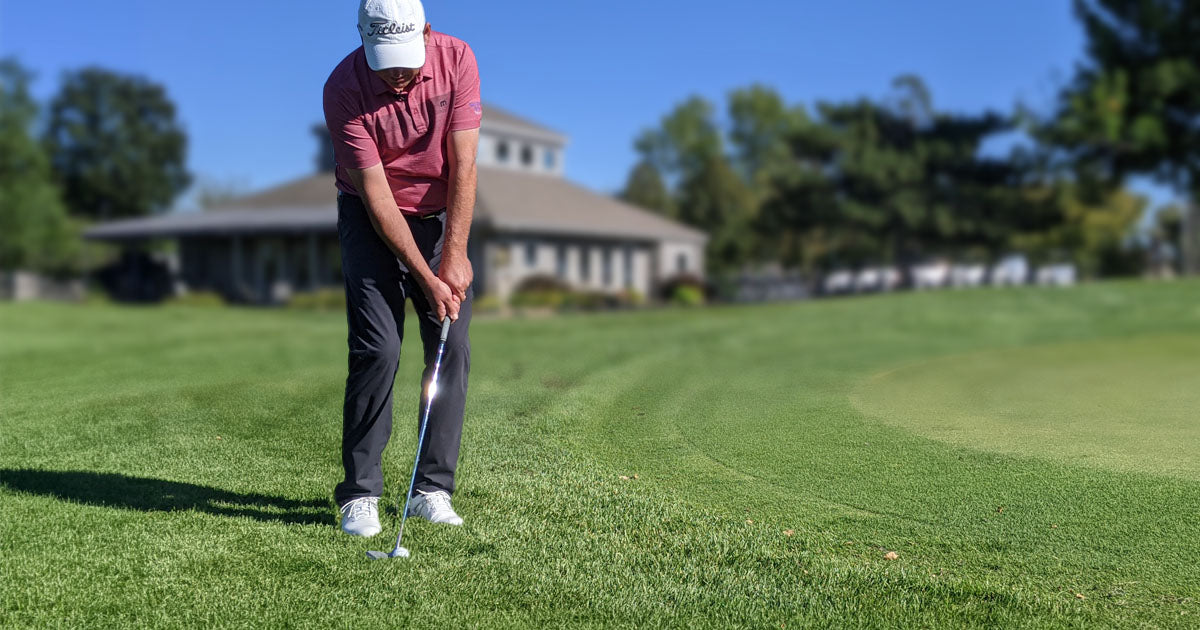
You’re not the only golfer looking for good chipping tips. My recent video on chipping got over four million views, and I’m thrilled, because it contains my best chipping tips for golfers of all levels. Now I’m sharing them with you.
I’ve had countless students make major breakthroughs in their short games because of these concepts. And the best part?
It’s just two fun drills and one feel.
Nothing to think about, analyze, or remember. We’re taking the shortcut to muscle memory here, so you can develop good chipping habits with minimal effort and maximum fun.
Let’s get to it.
Three Chipping Tips: Key Takeaways
-
The Lead Foot Only Drill helps you improve your contact by balancing on your lead foot, forcing your upper body to remain steady throughout your swing.
-
The Trail Hand Only Drill results in better touch and feel by allowing your dominant hand to control the shot.
-
You get better contact and distance control in chip shots when you feel the butt end of the club initially moving away from the target in the takeaway.
-
Stick with only one or two wedges to ensure you get enough practice with them to truly master them.
The Best Drill to Improve Contact in Chip Shots
I teach this drill to every one of my students, from beginners to tour professionals. It’s called the Lead Foot Only Drill, and it’s incredibly effective at training your body to stay centered and steady in your swing.
Lead Foot Only
-
Instead of taking your regular chipping stance, position your lead foot in line with the golf ball.
-
Balance all your weight on the lead foot, resting the toe of your trail foot on the ground behind you for support. (You can lift the trail foot if you prefer, but I typically recommend using it as a kickstand for the sake of safety and stability.)
-
Hit some chip shots from this position.
You can also do this without a ball, especially when you’re first getting used to the feel of it.

Why It Works
A lot of amateur golfers move their upper body too much in their swing, tilting away from the target as they swing through. It’s one of the most common chipping errors, and if you’re constantly chunking it or skulling it, there’s a good chance you’re making this mistake.
But when you’re balanced on one foot, you instinctively avoid the tilt. The Left Foot Only Drill taps into that instinct, forcing you to keep your upper body centered and steady without having to think about it.
The more you practice this drill, the more natural that steadiness becomes. That’s going to equal much better contact going forward.
The Best Drill to Improve Touch and Feel in Chip Shots
If distance control is the main reason you’re looking for chipping tips, you’ll love this drill. It’s a little challenging to do at first, but once you get the hang of it, you’ll see fast results.
Trail Hand Only Drill
-
Get set up without a golf ball.
-
Grip down on the club with your trail hand only.
-
Put your lead hand in your pocket.
-
Make a few continuous swing motions back and through.
-
Step up to the ball and hit some chip shots.
As I said, this won’t feel natural or easy right away, but stick with it. With a little repetition, this drill will do wonders for your touch and feel.

Why It Works
Your trail hand is your dominant hand. It’s the hand you use to do anything that requires precision and control.
Throw a football. Sign your name. Screw in a lightbulb. Try any of these things with your non-dominant hand, and you’ll find you’re a little clumsier and not as good at judging the amount of force you need to accomplish your goal.
So in the Trail Hand Only Drill, you remove the non-dominant hand completely. It gives you a chance to focus on the “wisdom” of your dominant hand. While it’s awkward at first, you’ll soon discover more control over your distance.
A Chipping Feel You Can Bring to the Golf Course
Now this is the golden nugget. This is one of the best chipping tips you’ll ever get—maybe the best—and you won’t hear it anywhere else. That’s partly because it contradicts a common strategy… one that does more harm than good for amateur golfers.
When you’re making a chip shot in a round of golf, you want to feel the butt end of the club initially moving away from the target.
A lot of golfers immediately hinge the butt end of the club toward the target—the old “hinge and hold” method. This move makes the ball come out hot and low.
For more control over your shot, get the butt end of the club moving away from the target at first, then you can hinge it a little.

What’s the Best Wedge for Amateur and Senior Golfers?
The three chipping tips you just learned will have a huge impact on your chip shots, especially compared to how little effort it takes to put them to work in your game. But even with these practices in place, there’s still one big hurdle to overcome…
…and that’s how rarely you use your wedges.
We’ve got all these different wedges specialized for different types of shots, and each type of shot only comes up a few times in a round. That means you never get a chance to master any one wedge.
That’s why I recommend sticking to just one or two wedges. Proficiency with a club outweighs the specialization of the club. It doesn’t matter if you’ve got the “correct” wedge for the shot if you can’t control it.
This is also why I love the Align Grind Wedges for amateur golfers. These wedges are deliberately built for versatility, and they’re designed with Auto-Aim, shot-correcting Perimeter Payload Weighting, and a ton of other innovative features you’ll want to check out.
Get to know the Align Grind Wedges here.
Next-Level Chip Shots
You’re off to a strong start with these tips, but if you’re ready to take your game even further, check out my bestselling book The Easy Break. It’s a no-fluff guide to a radically simple short game system that’s proven to get results for everyone from new senior golfers to an LPGA major champion.

The book is full of images, practice plans, checklists, and more. Get your copy here, and get ready to save strokes by saving your short game.






Share:
Golf Low Point: How to Stop Hitting Behind the Ball
Senior Golf Tips: Master an Easy Golf Swing in 3 Steps